
AI automation for logistics and freight companies
We build AI agents that read quote requests, bills of lading and PODs, then update McLeod, CargoWise, Magaya or your TMS without retyping. Dispatchers and brokers spend their time on carriers and customers instead of inboxes and spreadsheets.

Agent flow
What can logistics and freight companies automate with AI?
Logistics and freight companies can automate quote intake and pricing drafts, load and shipment data entry, document capture from bills of lading, PODs and invoices, tracking updates to customers, carrier check calls and freight bill auditing. AI agents read emails and PDFs, update the TMS and flag exceptions, while final rates, claims and carrier choice stay with your team.
- Turn emailed quote requests into structured RFQs in your TMS
- Extract data from BOLs, PODs and carrier invoices automatically
- Send customers proactive delay and delivery updates
- Run carrier check calls and log ETAs with an AI voice agent
The work that quietly eats the week
We hear the same handful of time sinks from almost every logistics and freight team we talk to.
- 01Quote requests arrive as messy emails and attachments, and each one takes manual retyping before pricing.
- 02Dispatchers spend hours on check calls asking drivers and carriers for ETAs and locations.
- 03Bills of lading, PODs and rate confirmations are keyed into the TMS by hand, and typos delay billing.
- 04Customers email 'where is my shipment?' constantly, and answering means checking three portals.
- 05Carrier invoices with accessorial charges slip through unchecked because nobody has time to audit them.
Automations built for logistics and freight
Each one connects to the software you already use and is quoted at a fixed price after a free review.
Email quote request intake
When a quote request hits the shared inbox, an AI agent extracts origin, destination, weight, dims, commodity and dates from the email, creates the RFQ in McLeod or Magaya and drafts a price from your rate tables for review.
BOL and POD data capture
Scanned or photographed bills of lading, PODs and rate confirmations are read by AI the moment they arrive, matched to the right load, and written into CargoWise or your TMS, with unclear fields sent to a person to check.
AI check calls to carriers
At set times on each active load, an AI voice agent calls or texts the driver or carrier for location and ETA, logs the answer in McLeod or Turvo, and alerts dispatch when a delivery window is at risk.
Proactive shipment updates
When a status changes or an ETA slips in your TMS or tracking feed from project44 or FourKites, customers receive a clear update by email or WhatsApp, so they hear about delays from you first.
Freight invoice audit
Each carrier invoice is compared against the rate confirmation and actual load details. Unapproved accessorials, duplicate charges and rate mismatches are flagged before payment, and clean invoices move to QuickBooks or Xero for approval.
Ops performance dashboard
Every night the system pulls loads, margins, on-time performance and detention from your TMS and accounting tools into Power BI, so managers start the day knowing which lanes, customers and carriers need attention.
A typical build, end to end
Turns invoices, forms and contracts into clean data in your accounting and CRM.
AI document processing for bills of lading and PODs
Freight runs on paper that arrives in every format imaginable: clean PDFs, phone photos of crumpled PODs, scanned rate confirmations and email threads with the key details buried halfway down. Traditional OCR templates break whenever a carrier changes its layout. AI document processing reads the document the way a person would, finds the shipper, consignee, references, weights and signatures, and maps them to the right fields in your TMS or ERP.
Each extracted record carries a confidence score. Clear documents flow straight through, while anything uncertain, such as a smudged weight or a missing signature, goes to a review queue where a team member confirms it in a few seconds. Matched PODs can trigger invoicing the same day instead of waiting for someone to work through a stack of paperwork, which shortens the gap between delivery and getting paid.
Freight quote automation for brokers and forwarders
Quote speed often decides who wins the load. Yet many brokerages and forwarders still read each request, copy the lane details into a TMS, check rate history and DAT or Freightos benchmarks, then type a reply. An AI quoting assistant does the reading and copying for you. It parses the request, pulls similar past shipments and current market data, and prepares a draft quote with margin guidance for your pricing team.
A person still approves every rate before it goes out, because pricing is a commercial decision that depends on relationships and capacity the data cannot see. What changes is the time between request and reply, and the number of quotes your team can handle without burning out. Over time the same data shows which customers, lanes and quote types convert best, so sales effort goes where it pays.
What logistics and freight teams usually start with
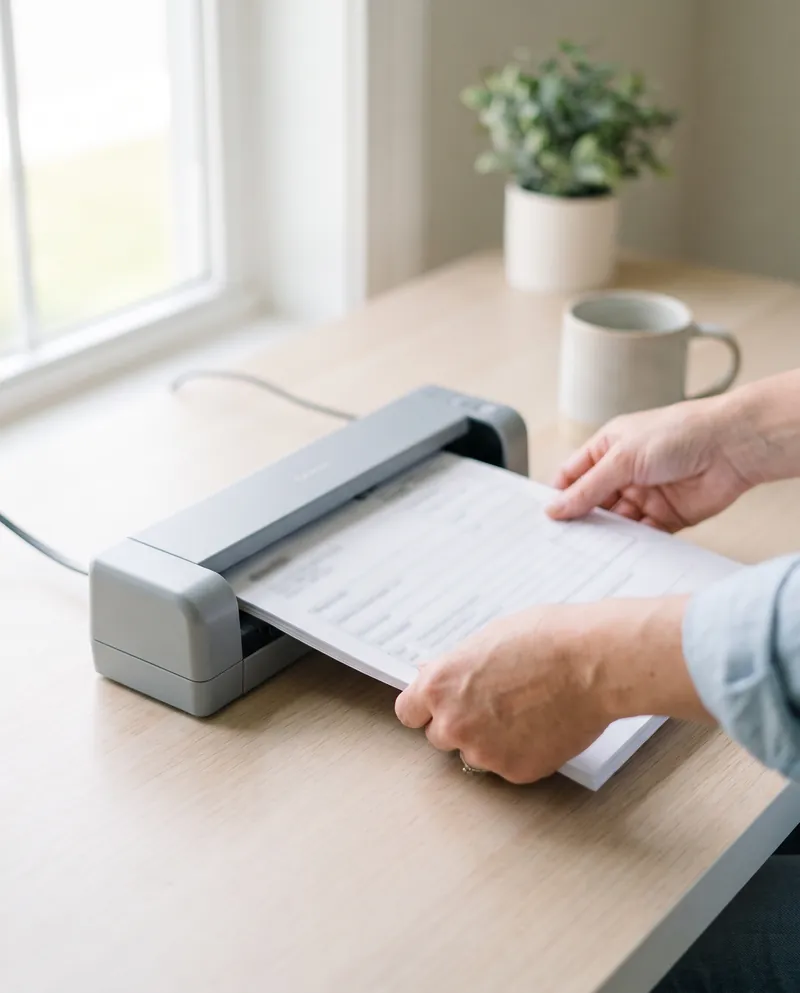 Document Processing AutomationPull clean data from invoices, statements, IDs and contracts without manual entry.
 Email and Inbox AutomationSort shared inboxes, draft replies for approval and file attachments where they belong.
 AI Agent DevelopmentCustom AI agents that do multi-step work across your tools, with a person approving key calls.
Questions from logistics and freight teams
Does this work with our TMS?
Most likely. We have options for McLeod, CargoWise, Magaya, Descartes, Turvo, Aljex, Revenova and others through APIs, EDI, email parsing or database connections. Older systems without an API can often be updated through import files or browser automation. We confirm the method for your exact setup during the free audit, before any quote.
Can an AI voice agent really handle check calls?
For routine check calls, yes. The voice agent asks for location, ETA and any issues, understands normal driver answers, and logs them against the load. If a driver reports a breakdown, delay or accident, the call is flagged for a dispatcher immediately. A practical setup combines it with ELD data from Samsara or Motive, calling only when tracking goes quiet.
How accurate is AI data extraction from freight documents?
Accuracy is high on clean documents, and on poor scans the system flags the fields it is unsure about. Every field gets a confidence score, and anything below your threshold goes to a person for a quick check. We test on a sample of your real documents before launch so you can see the accuracy for yourself.
We are a small forwarder. Is this worth it for us?
Smaller teams often feel the benefit most, because the same few people handle quotes, documents and customer calls. We start with the single process that eats the most hours, usually quote intake or POD processing, and give you a fixed price in writing. A first working version is typically live in 2 to 4 weeks.
Automate the busywork in your logistics and freight business
Describe one process. Within one business day you get a first take on what can be automated, which tools fit and roughly what it would take.
- 30-minute call, no slides, no pressure
- One fixed price before any work starts
- You own every workflow, account and line of code